6 Jul 2026
How Broadcast Delay Patterns Quietly Shift In-Play Handicap Accuracy During Test Cricket Sessions
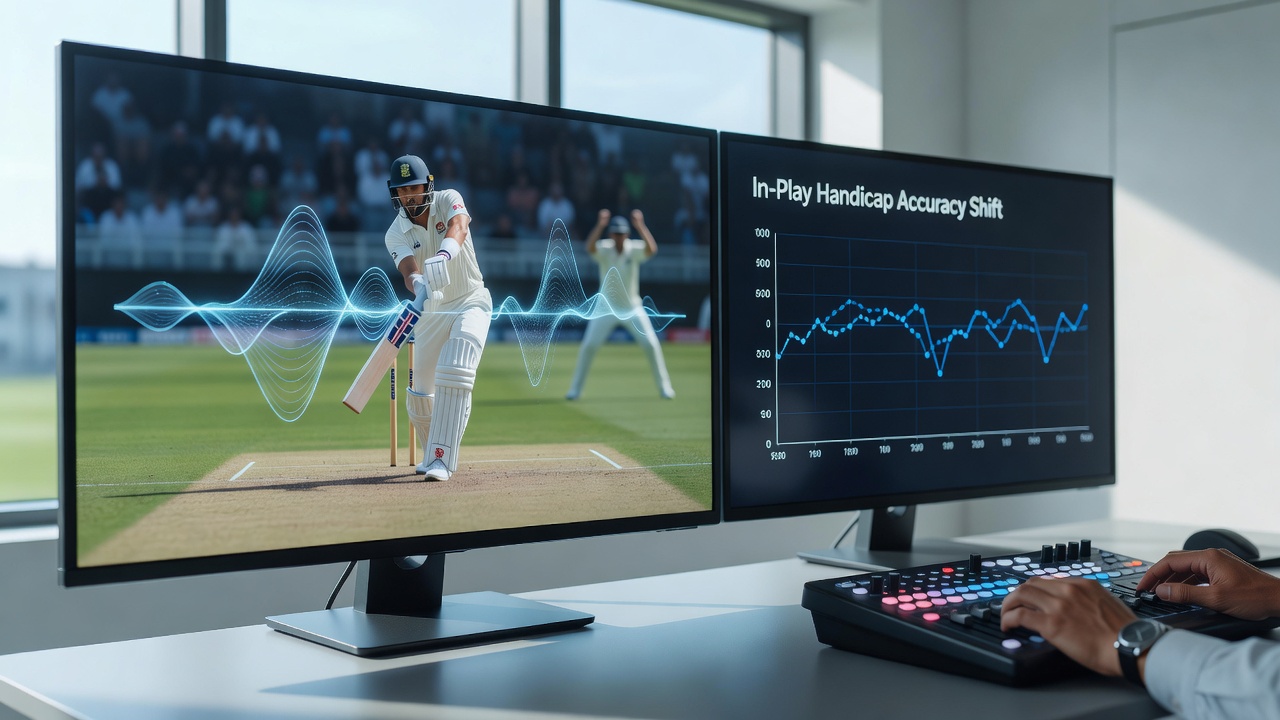
Test cricket sessions stretch across multiple days with extended periods of play that create unique challenges for in-play betting markets, particularly when broadcast signals encounter variable delays ranging from four to twelve seconds depending on production setups and transmission routes. These offsets emerge because production teams compress footage, insert graphics overlays, and route signals through satellite or fiber networks before reaching domestic and international audiences, and the resulting lag separates what actually occurs on the field from what appears on screens used by traders and bettors.
Mechanics Behind Signal Timing in Live Cricket Coverage
Production crews at major venues employ multiple camera angles that feed into a central truck where directors select shots, apply slow-motion replays, and synchronize audio commentary before the composite signal departs for distribution. Each processing step adds milliseconds that accumulate into noticeable delays once the feed travels through geostationary satellites or undersea cables to reach different regions. Observers note that venues in remote locations experience longer offsets than those connected to dense urban fiber grids, and these differences become pronounced during afternoon sessions when atmospheric conditions further affect uplink stability.
Effects on Real-Time Handicap Calculations
In-play handicap markets adjust continuously based on runs scored, wickets taken, and overs remaining, yet traders who rely on delayed footage issue updates that reflect events several seconds after they have already happened. Bettors viewing the same feed therefore place wagers on states that no longer exist in real time, which creates temporary mismatches between offered lines and actual match conditions. Data from multiple series shows these mismatches widen during periods of rapid scoring or sudden collapses, because the time gap prevents immediate incorporation of momentum shifts into handicap values.
Patterns Recorded Across Recent Test Series
Analysts tracking broadcast timestamps against official scoring data have identified recurring clusters where delay spikes coincide with high-action phases such as the final overs before lunch or tea intervals. During the 2025-26 Border-Gavaskar Trophy, engineers logged average offsets of 7.8 seconds across Australian venues, with peaks reaching 11 seconds when additional graphics packages were activated for viewer engagement. Similar measurements taken at venues in South Africa and New Zealand revealed comparable ranges, indicating that the phenomenon is not isolated to single broadcasting territories but stems from shared technical workflows across rights holders.
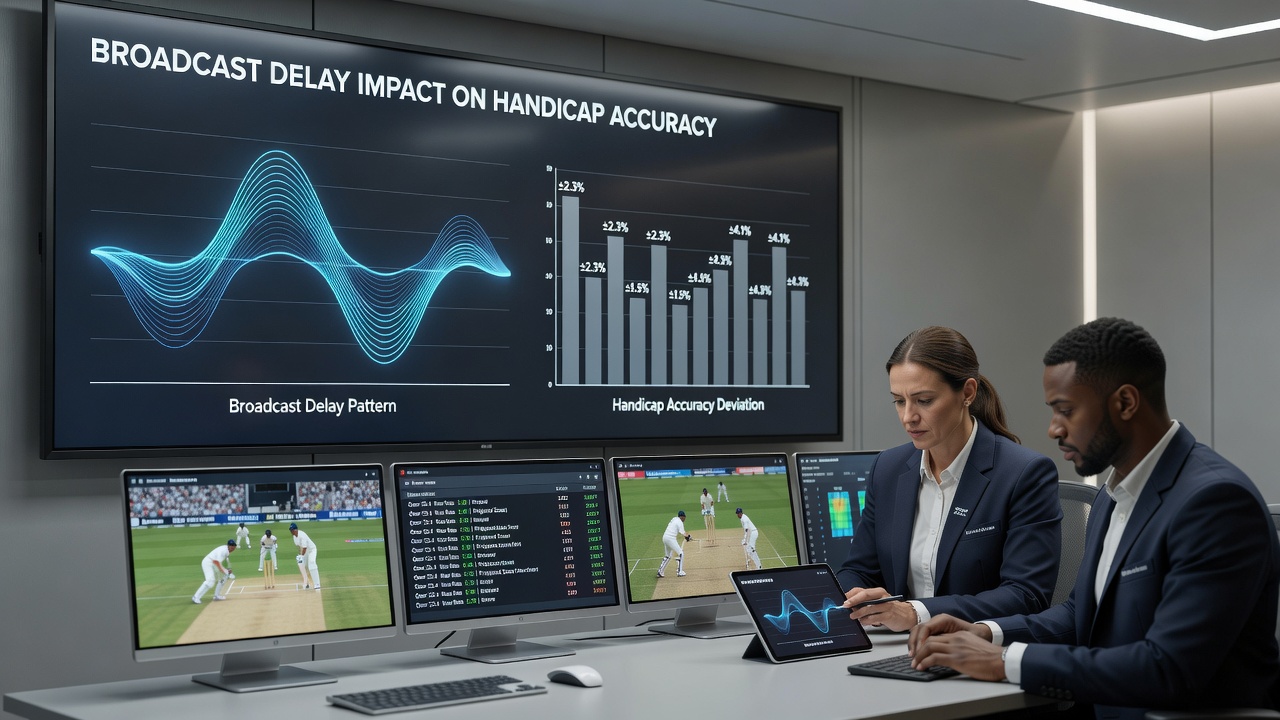
Those examining session-by-session logs further observe that morning sessions under clear skies tend to maintain steadier delay profiles than afternoon blocks when heat-related equipment stress or increased cloud cover can introduce micro-interruptions in transmission. July 2026 schedules, which feature multiple day-night Tests under floodlights, are expected to introduce additional variables because artificial lighting setups require extra camera calibration time that can extend the overall processing chain.
Technological Contributors and Mitigation Attempts
Network providers and rights holders have experimented with edge caching servers positioned closer to major betting hubs in an effort to shave seconds from delivery times. Some operators have also adopted hybrid delivery that combines traditional satellite with 5G backhaul for select markets, although adoption remains uneven across territories. Figures released by the International Cricket Council indicate that standardized latency benchmarks are under discussion for future media rights agreements, yet implementation timelines vary by region and infrastructure investment levels.
Independent research conducted at institutions including the University of Melbourne has modeled how even modest reductions in average delay could narrow the gap between on-field events and market updates. These models incorporate variables such as overs remaining, current run rate differentials, and historical volatility during specific session segments to estimate the scale of potential accuracy gains.
Market Adjustments and Operational Responses
Betting platforms that operate in regulated jurisdictions have begun incorporating latency buffers into their risk engines, allowing automated systems to pause or widen handicap lines during known high-delay windows. Supervisors at several operators cross-reference multiple camera feeds including official venue streams that bypass consumer broadcast paths, thereby accessing closer-to-real-time information for manual overrides when automated models flag anomalies. Such practices have become more common as data from governing bodies like Cricket Australia highlights the frequency of timing discrepancies during extended sessions.
Conclusion
Broadcast delay patterns arise from layered production and transmission processes that consistently separate live cricket action from viewer and trader screens. These offsets influence in-play handicap accuracy by creating temporary information asymmetries that widen during volatile passages of play. Measurements across recent series demonstrate measurable ranges and recurring session-based clusters, while ongoing technical trials and institutional discussions continue to address the underlying causes without eliminating the issue entirely. As schedules evolve through 2026 and beyond, continued monitoring of these timing dynamics remains central to maintaining alignment between on-field developments and live market valuations.