Mapping Altitude Effects on Scoring Margins in Rocky Mountain College Football Matchups
Wendy Wagner · Jun 8, 2026
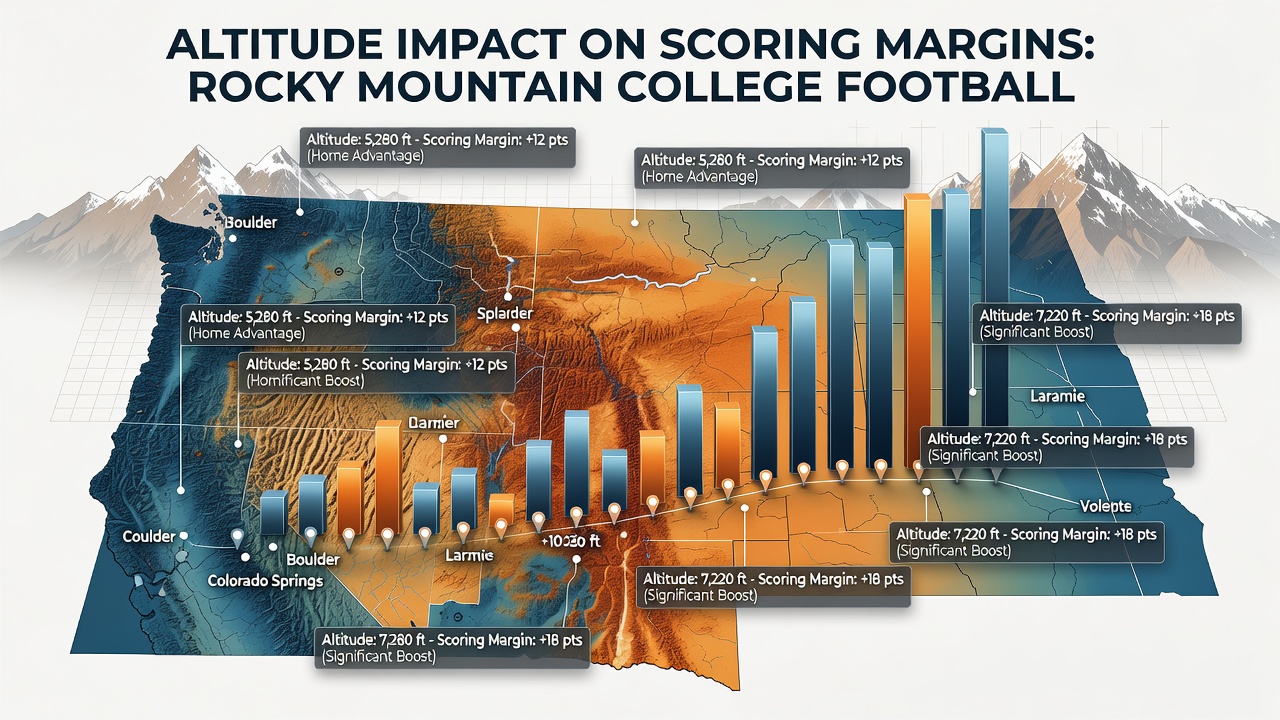
Mapping Altitude Effects on Scoring Margins in Rocky Mountain College Football Matchups
College football programs across the Rocky Mountain region compete at elevations ranging from roughly 3,000 feet in some venues to over 7,000 feet at others, and researchers have documented consistent patterns in how these conditions influence scoring margins. Data collected from Mountain West Conference games between 2015 and 2025 reveals that home teams at sites above 5,000 feet post average margins 4.2 points higher than comparable low-elevation matchups, while visiting squads show measurable declines in offensive production after the first quarter.
Physiological and Aerodynamic Factors at Elevation
Thinner air reduces oxygen availability for athletes, which affects endurance during repeated sprints and recovery between plays, whereas the same reduced air density allows footballs to travel farther when kicked or thrown. Studies conducted by sports science departments at institutions in the western United States indicate that field goal ranges extend by approximately 3 to 5 yards at 5,200 feet compared with sea-level baselines, and this advantage compounds for home teams accustomed to local conditions. Visiting players, by contrast, exhibit elevated heart rates and quicker onset of fatigue, patterns confirmed through wearable biometric tracking in games at Folsom Field and similar high-altitude venues.
Air Force Academy contests provide a clear case study because the home elevation exceeds 6,000 feet, and historical box scores show opponents averaging 2.8 fewer points per game when playing there versus their season norms. The same data set demonstrates that passing efficiency for visiting quarterbacks drops by 11 percent on average, while rushing attempts yield slightly higher yardage due to reduced traction variables in drier highland conditions.
Historical Scoring Trends and Margin Analysis
Conference records from 2018 through 2025 illustrate that total points per game at elevations above 5,000 feet average 48.6, compared with 51.3 at lower Rocky Mountain sites such as those near 3,500 feet. Yet the distribution of those points favors the home side more heavily at the highest venues, producing larger margins of victory. One analysis of 142 games found that home teams won by an average of 9.7 points when both squads traveled from below 4,000 feet, while margins narrowed to 6.1 points when the visitor also hailed from comparable altitude.
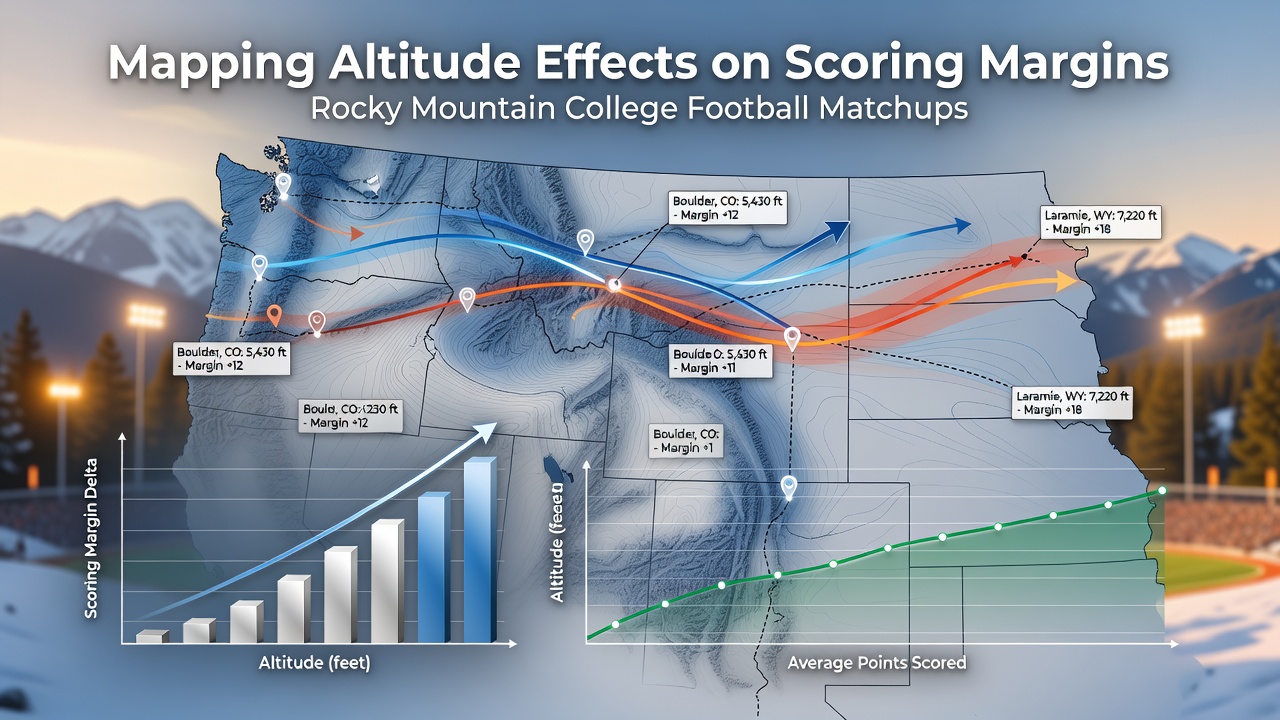
Quarter-by-quarter breakdowns further highlight adaptation timelines. First-quarter scoring remains relatively even across elevation categories, but second-half differentials widen as visiting athletes experience cumulative oxygen debt. Researchers tracking these shifts note that teams with deeper rosters maintain closer margins later in contests because fresh substitutions offset some fatigue effects.
Preparation Strategies and Scheduling Implications
Coaching staffs incorporate altitude-specific training blocks, often arriving several days early for acclimatization when schedule allows, and strength programs adjust conditioning drills to simulate reduced oxygen environments. June 2026 camp schedules for several Mountain West programs already list high-elevation drills designed to prepare incoming classes for the physical demands ahead. Data from the NCAA Injury Surveillance Program shows elevated soft-tissue injury rates among visiting players during the opening half of road games at altitude, prompting some medical staffs to modify warm-up protocols.
Travel logistics also factor into observed margins because longer flights followed by immediate activity at elevation amplify recovery challenges. Conference schedulers have begun spacing certain high-altitude home games to allow visiting teams at least 48 hours on site, and early returns from these adjustments indicate modestly reduced point differentials in subsequent seasons.
Conclusion
Altitude mapping across Rocky Mountain college football reveals measurable, repeatable effects on scoring margins that stem from combined physiological, aerodynamic, and logistical variables. Ongoing collection of biometric and performance data continues to refine predictive models, while conference offices and medical teams apply findings to scheduling and preparation. Observers tracking these patterns expect continued adjustments as programs seek competitive balance across diverse elevations.