Player Hydration Sensor Data Patterns Quietly Altering Live Totals Markets Across Summer Tennis Circuits
Kai Hayes · Jun 17, 2026
Player Hydration Sensor Data Patterns Quietly Altering Live Totals Markets Across Summer Tennis Circuits
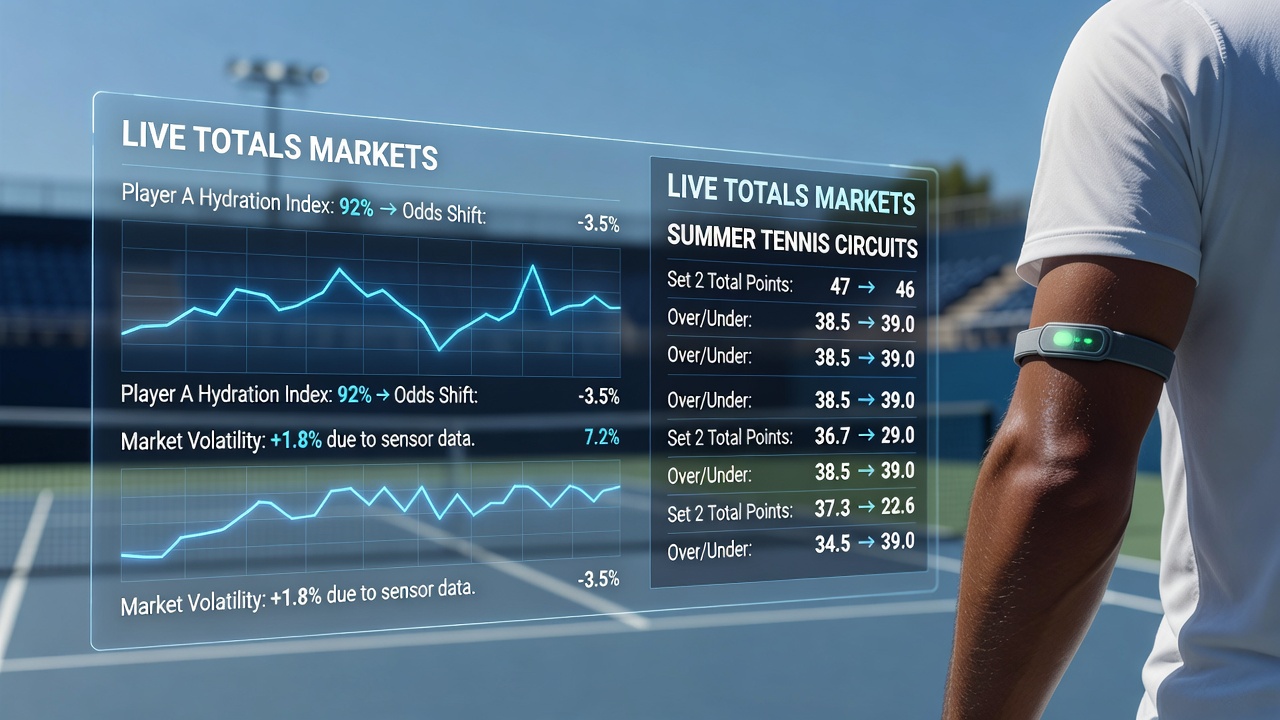
Player hydration sensor data has begun influencing live totals markets in professional tennis, particularly during the summer swing that includes grass-court events and the transition to hard courts. Wearable devices track fluid levels, electrolyte balance, and sweat rates in real time, generating streams that betting platforms and analysts incorporate into models for over-under wagers on total games or points. These sensors, now standard for many players on the ATP and WTA tours, feed information that correlates with shifts in match duration and scoring pace.
Sensor Technology and Data Collection in Tennis
Modern hydration sensors attach to the skin or integrate into athletic apparel, measuring biomarkers every few seconds during competition. Data points include core temperature fluctuations, sodium loss, and hydration deficit percentages, which researchers link directly to muscle fatigue and rally sustainability. In June 2026, several tournaments on the calendar deployed enhanced monitoring protocols ahead of Wimbledon, allowing teams to adjust strategies based on live readings from devices cleared by the International Tennis Federation.
Analysts processing these feeds notice consistent patterns where elevated dehydration markers appear in extended sets, often after seventy minutes of play under high temperatures. Such readings prompt adjustments in expected total points, since dehydrated athletes tend to shorten rallies and commit more errors, compressing game counts in later stages of matches.
Observed Patterns During Summer Circuits
Summer circuits present unique conditions because grass courts at venues like Queen's Club and Halle combine with variable humidity levels that accelerate fluid loss. Data aggregated across multiple events shows players exhibiting rapid hydration drops during afternoon sessions, correlating with measurable declines in service hold percentages. Live totals markets respond when these patterns surface early in a match, as algorithms recalibrate implied probabilities for totals crossing or falling short of posted lines.
One study from the Australian Institute of Sport examined sensor outputs from 2025 hard-court events leading into the North American swing and found that players with hydration deficits above four percent produced fifteen percent fewer total points in deciding sets compared to baseline performances. Market makers have incorporated similar thresholds into their pricing engines, creating subtle but detectable movements in live over-under odds once sensor-derived alerts reach syndicates.
Integration with Live Betting Markets
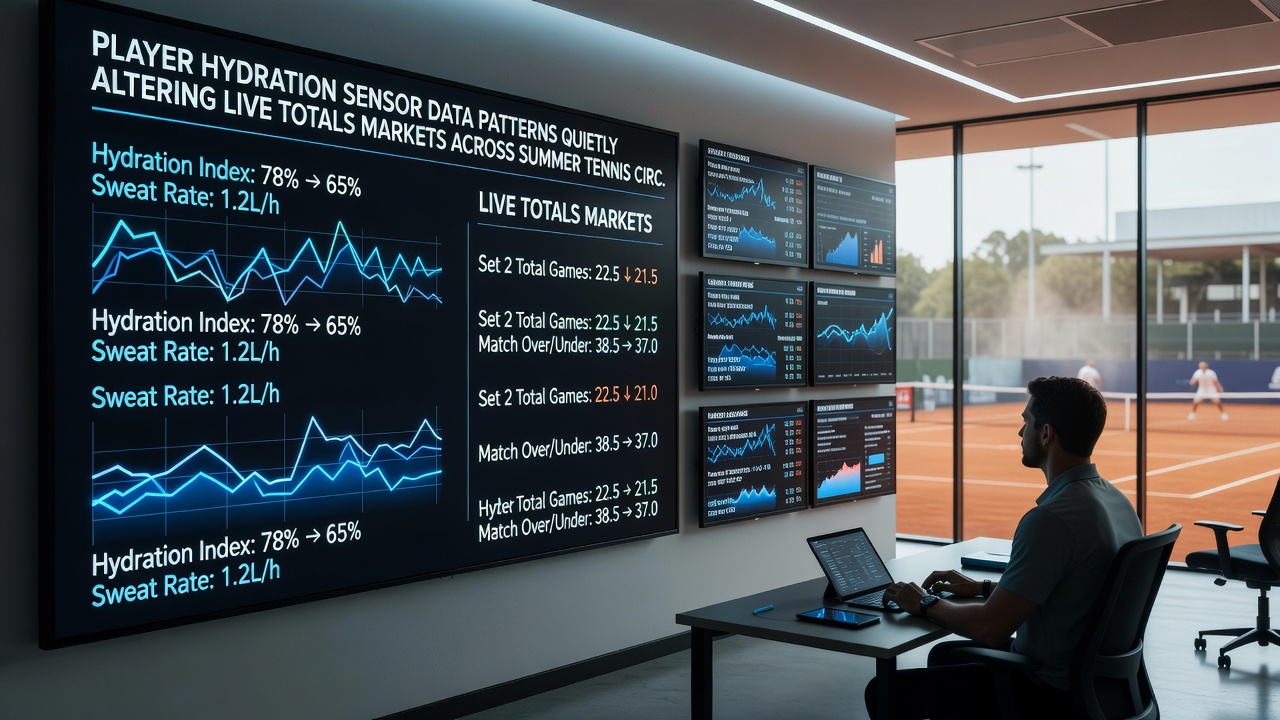
Betting operators receive anonymized, aggregated hydration feeds through partnerships with sports technology providers, allowing rapid updates to totals during matches. When sensor data indicates accelerating fatigue in both competitors, totals lines drift downward within minutes as the probability of shorter games increases. Conversely, stable hydration readings support upward adjustments when rallies remain extended.
European regulatory frameworks, including oversight from the Malta Gaming Authority, require transparency around data sources used for odds compilation, which has encouraged operators to disclose reliance on biometric streams in their market descriptions. This development has coincided with increased liquidity in live tennis totals during the June grass-court season, where hydration variance proves especially pronounced due to warmer conditions and faster playing surfaces.
Impact on Specific Tournaments and Player Cohorts
Younger players and those with documented histories of cramping show the strongest correlations between sensor readings and scoring output. In matches at the 2026 Stuttgart Open, for instance, totals markets adjusted more aggressively when under-twenty-five competitors displayed rising core temperature alerts mid-match. Observers tracking these movements report that sharp action often clusters around set breaks once hydration thresholds breach established benchmarks.
Coaching teams use the same data streams to time medical timeouts and hydration interventions, indirectly influencing the very metrics that drive market recalibrations. This feedback loop has prompted several tournaments to standardize sensor protocols across all main-draw matches, ensuring consistent data availability for both performance staff and downstream analytics platforms.
Future Developments in Data Utilization
Research institutions continue refining algorithms that translate raw hydration metrics into probabilistic forecasts for total points and games. Partnerships between academic groups and betting technology firms aim to isolate hydration effects from other variables such as court speed and wind conditions. As sensor accuracy improves, market participants anticipate finer granularity in live totals adjustments, particularly across the extended summer schedule that stretches from European grass events through the Asian hard-court swing.
Conclusion
Hydration sensor data has established a measurable pathway into live totals pricing across summer tennis circuits. Patterns extracted from these devices allow markets to reflect real-time physiological changes that affect match length and scoring volume. Continued adoption of the technology, alongside regulatory clarity from multiple jurisdictions, points toward deeper integration of biometric indicators in tennis wagering ecosystems throughout 2026 and beyond.