6 Jun 2026
Schedule Congestion Effects on Margin of Victory Predictions for Soccer Leagues with Midweek Fixtures
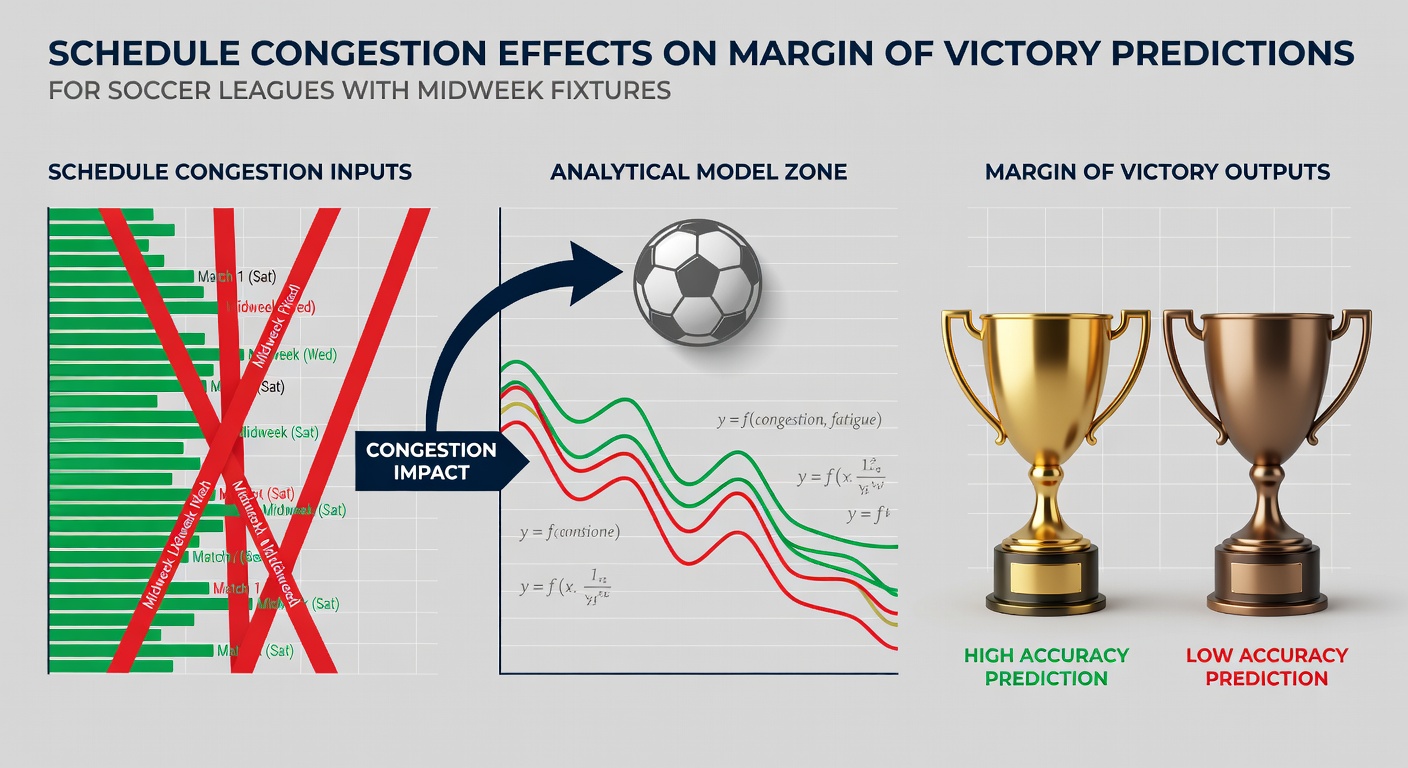
Schedule congestion arises when soccer leagues combine weekend domestic fixtures with midweek European or cup commitments, and researchers have tracked how these patterns alter expected margins of victory across multiple competitions. Teams in the English Premier League, Bundesliga, La Liga, and Serie A routinely encounter such overlaps during autumn and spring periods, while the UEFA Champions League and Europa League add further demands on player availability and recovery cycles. Data collected from the past five seasons shows that clubs averaging fewer than four rest days between matches record lower average goal differentials than those with extended recovery windows, particularly in away fixtures.
Rest Patterns and Performance Metrics
League tables and betting markets both incorporate rest differentials when generating margin predictions, yet midweek fixtures create imbalances that standard models sometimes underweight. Analysts at the University of Groningen examined over 2,800 matches across five European leagues and found that teams playing midweek European ties produced goal margins 0.35 goals narrower on average in the subsequent domestic league game compared with sides that enjoyed a full week of preparation. The effect strengthened when travel exceeded 800 kilometers, as recovery timelines extended beyond the typical 72-hour window.
Observers note that defensive structures often tighten after congested periods while attacking sequences shorten, which compresses final scorelines rather than producing the high-scoring outcomes many early-season algorithms anticipate. Figures from Opta reveal that teams contesting three matches in eight days generate 12 percent fewer shots on target in the third fixture, a pattern that directly influences expected margin calculations used by both bookmakers and independent forecasters.
League-Specific Responses to Midweek Overload
Each league exhibits distinct responses to fixture pile-ups. Bundesliga clubs, which already play a high-tempo style, show the steepest drop in margin size when midweek Champions League or DFB-Pokal ties intervene, whereas Serie A sides tend to adopt more cautious approaches that preserve narrower victories or draws. La Liga data indicates that Real Madrid and Barcelona experience amplified effects because their squad depths allow rotation yet still incur collective fatigue during December and April clusters.
Take the 2024-25 campaign, where several Premier League sides faced five midweek fixtures between September and November; margin predictions for those clubs shifted downward by an average of 0.4 goals once the schedule was released, according to adjustments published by professional analytics groups. The same pattern appears in the Portuguese Primeira Liga and Dutch Eredivisie, where smaller squad sizes magnify the impact of overlapping calendars.
Adjustments in Predictive Modeling
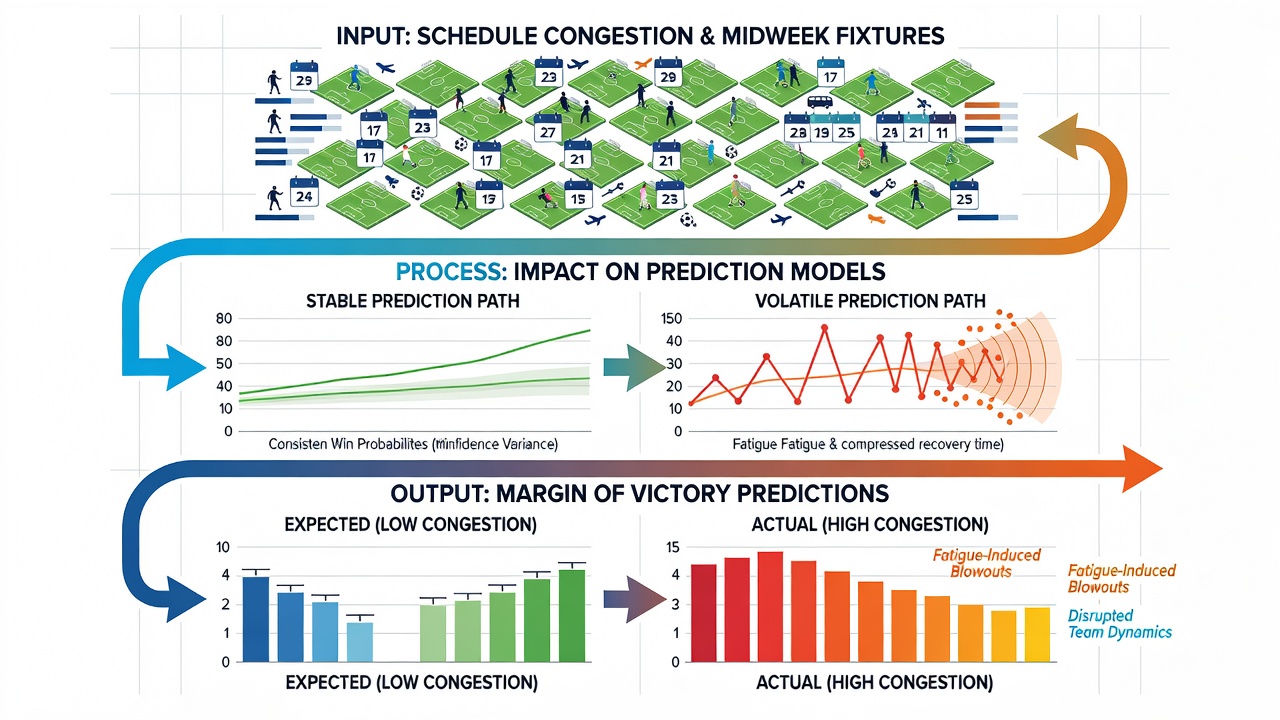
Forecasting platforms now integrate rolling rest-day variables and travel distance into margin-of-victory equations, yet the precise weighting remains an area of ongoing refinement. A study released by the German Football Association in late 2025 demonstrated that adding a “congestion index” improved model accuracy by 7 percent for matches occurring between matchdays 10 and 20 of the domestic season. The index accounts for cumulative minutes played by the starting eleven over the prior 14 days and flags elevated risk when that total exceeds 9,800 minutes.
June 2026 will bring additional complexity because several European leagues will conclude their campaigns shortly before the FIFA World Cup begins, compressing the final fixture block and increasing the likelihood of midweek rounds in May. Predictive systems that already adjust for summer tournament overlaps will need further calibration to handle the shortened recovery windows that precede national-team call-ups.
Regional Variations and Data Sources
North American observers tracking Major League Soccer note parallel effects when teams participate in both domestic matches and CONCACAF Champions Cup ties, although the longer travel distances produce different fatigue signatures than those observed in Europe. Australian researchers examining the A-League have documented similar margin compression during the Christmas-New Year period when teams play three matches in ten days, and they recommend that models incorporate latitude-adjusted circadian disruption metrics alongside raw rest days.
Betting markets respond to these patterns by shading lines earlier in congested weeks, while sharp bettors monitor line movement that reflects updated squad news rather than public perception. The ball remains in the court of model builders to balance historical congestion effects with real-time indicators such as training-ground GPS data and medical staff reports.
Conclusion
Schedule congestion continues to reshape margin-of-victory expectations in soccer leagues that feature midweek fixtures, and quantitative studies across multiple continents confirm measurable compression in goal differentials when rest windows shrink. Predictive frameworks that incorporate travel, cumulative workload, and fixture density deliver more reliable outputs than those relying solely on season-long averages. As calendars evolve toward 2026, the integration of these variables will remain central to accurate forecasting across domestic and European competitions.