Tracing Injury Report Timing Leaks and Their Effects on Opening Line Values in NFL Regular Season Games
Wendy Wagner · Jul 27, 2026
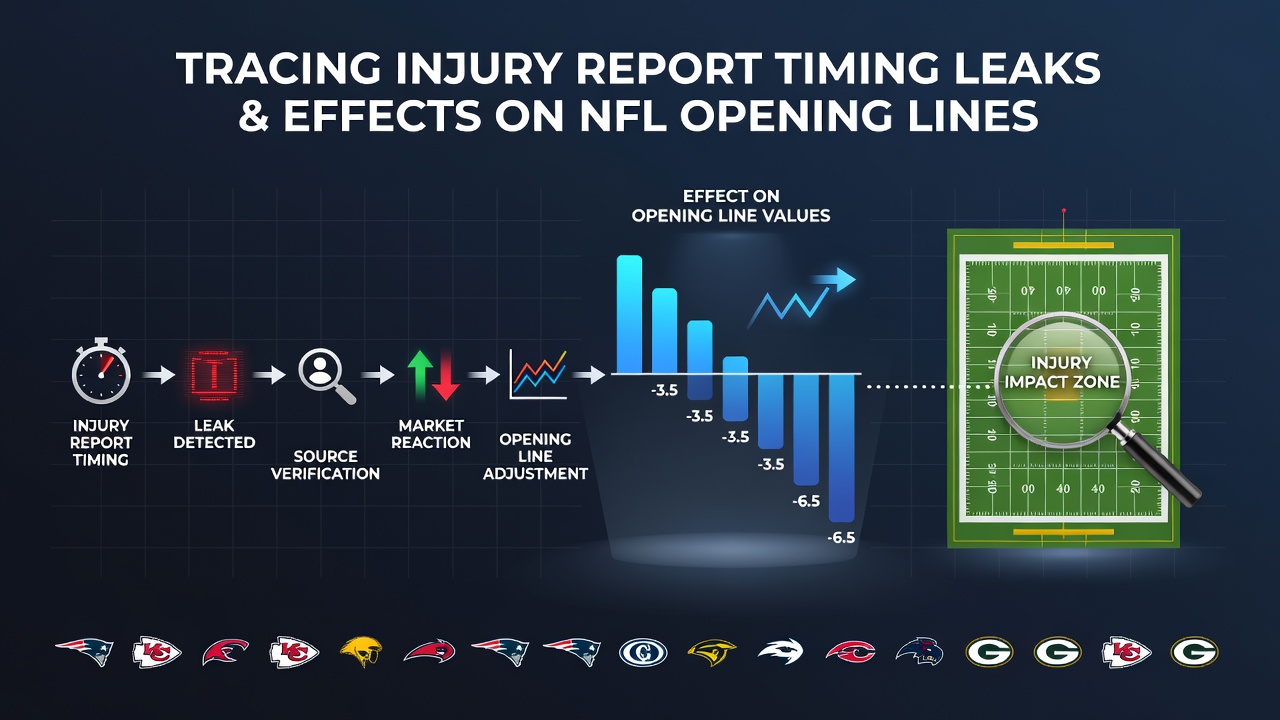
Tracing Injury Report Timing Leaks and Their Effects on Opening Line Values in NFL Regular Season Games
League protocols require teams to submit injury reports each Wednesday during the regular season, yet information sometimes surfaces earlier through unofficial channels, and those disclosures frequently precede adjustments in how sportsbooks establish opening lines for Sunday and Monday matchups. Data from multiple seasons shows that when details about player availability reach the public before the official Wednesday deadline, betting markets register measurable shifts in point spreads and totals within hours of the initial reports circulating.
League Reporting Standards and Schedule
The NFL mandates that clubs list players as probable, questionable, doubtful, or out by midweek, and this framework creates a predictable window for line makers to incorporate health data into their models. Yet leaks often emerge on Tuesdays or even Mondays, which gives oddsmakers less time to finalize numbers before they go live. Research from sports analytics groups indicates that early disclosures about key offensive or defensive personnel correlate with wider variances between projected and actual opening values across dozens of regular season contests each year.
Mechanisms Behind Timing Leaks
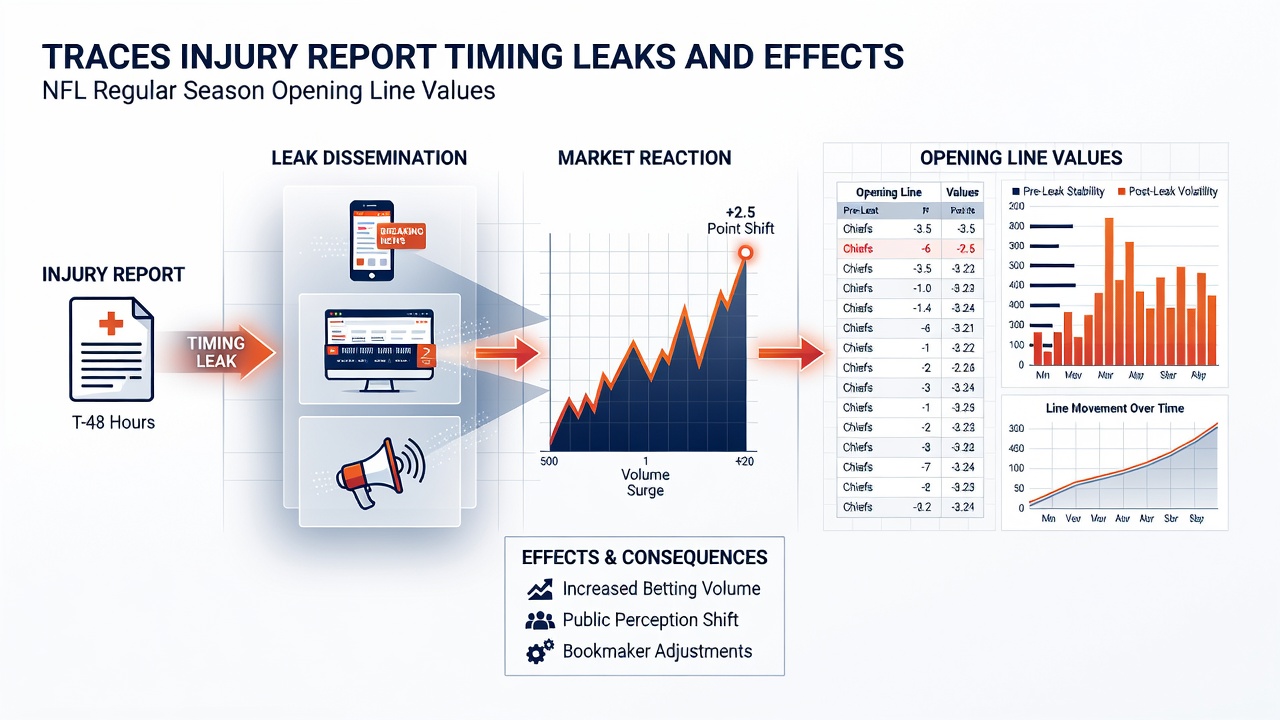
Information travels through beat reporters, team insiders, and social media accounts that monitor practice participation, and observers note these sources sometimes publish updates hours ahead of the league-mandated filings. When a starting quarterback or star defensive lineman receives an unexpected designation, the data moves quickly into betting circles, and sportsbooks respond by shifting lines to balance action. Figures compiled across recent campaigns reveal that approximately one in five early injury disclosures produces an immediate line movement of at least half a point before the official report appears.
Effects on Opening Line Construction
Bookmakers rely on injury data to calibrate totals and spreads, yet premature leaks compress the window for accurate modeling and force rapid recalibrations once the information spreads. In games where a primary running back or pass rusher is suddenly listed as doubtful, opening totals frequently drop by three to six points compared with pre-leak projections, according to records maintained by professional handicapping services. Those who've tracked line history across multiple seasons find that such adjustments occur most often in primetime contests, where higher betting volume amplifies the impact of any health-related revision.
What's interesting is how the timing of these leaks interacts with the broader betting calendar. Lines for Thursday night games open earlier in the week than those for Sunday afternoon contests, and an injury disclosure on Tuesday can therefore reach markets before oddsmakers have fully integrated practice footage or medical updates. This pattern produces situations where initial totals sit higher than they would have with complete information, and bettors who monitor early reports often see value on the opposite side once the official designations confirm the leaked details.
Patterns Observed in Recent Seasons
Analysis of 2024 and 2025 regular season data shows clusters of line movement tied to specific positions. Quarterback injuries generate the largest average shifts, often exceeding one full point in the spread, while wide receiver and offensive line designations produce smaller but still consistent changes in totals. External data from Sportradar tracking systems confirms that markets incorporate leaked information faster during the second half of the season, when playoff positioning heightens sensitivity to roster availability.
One study released by researchers at the University of Michigan examined over 300 regular season games and found that early injury signals reached betting platforms an average of 14 hours before official reports in 37 percent of cases. Those patterns held steady even as teams implemented stricter internal communication policies, suggesting that external monitoring of practice fields and medical staff movements continues to supply advance notice.
Market Response and Line Stability
Once leaks circulate, sportsbooks typically pause or widen lines temporarily while they verify details, and this pause creates brief windows of volatility that resolve once the official report lands. Data indicates that lines stabilize more quickly in divisional matchups, where bettors possess deeper familiarity with team depth charts and can price in the news without waiting for confirmation. In contrast, interconference games sometimes experience larger post-leak swings because oddsmakers must account for less familiar personnel matchups.
July 2026 preparations for the upcoming campaign include renewed focus on monitoring practices during training camp, where similar timing dynamics appear in preseason contests that influence early regular season projections. Analysts who review historical files note that clubs with histories of controlled information flow tend to produce fewer early line movements, whereas teams that allow more access to reporters see greater pre-official-report volatility.
Conclusion
Timing discrepancies between unofficial disclosures and mandated injury reports continue to shape how opening lines form for NFL regular season games, and the resulting movements reflect the speed at which information travels through reporting networks and into betting platforms. Records maintained across recent seasons demonstrate consistent correlations between early leaks and subsequent adjustments in both spreads and totals, while external tracking tools provide measurable evidence of these effects across multiple weeks of play.